
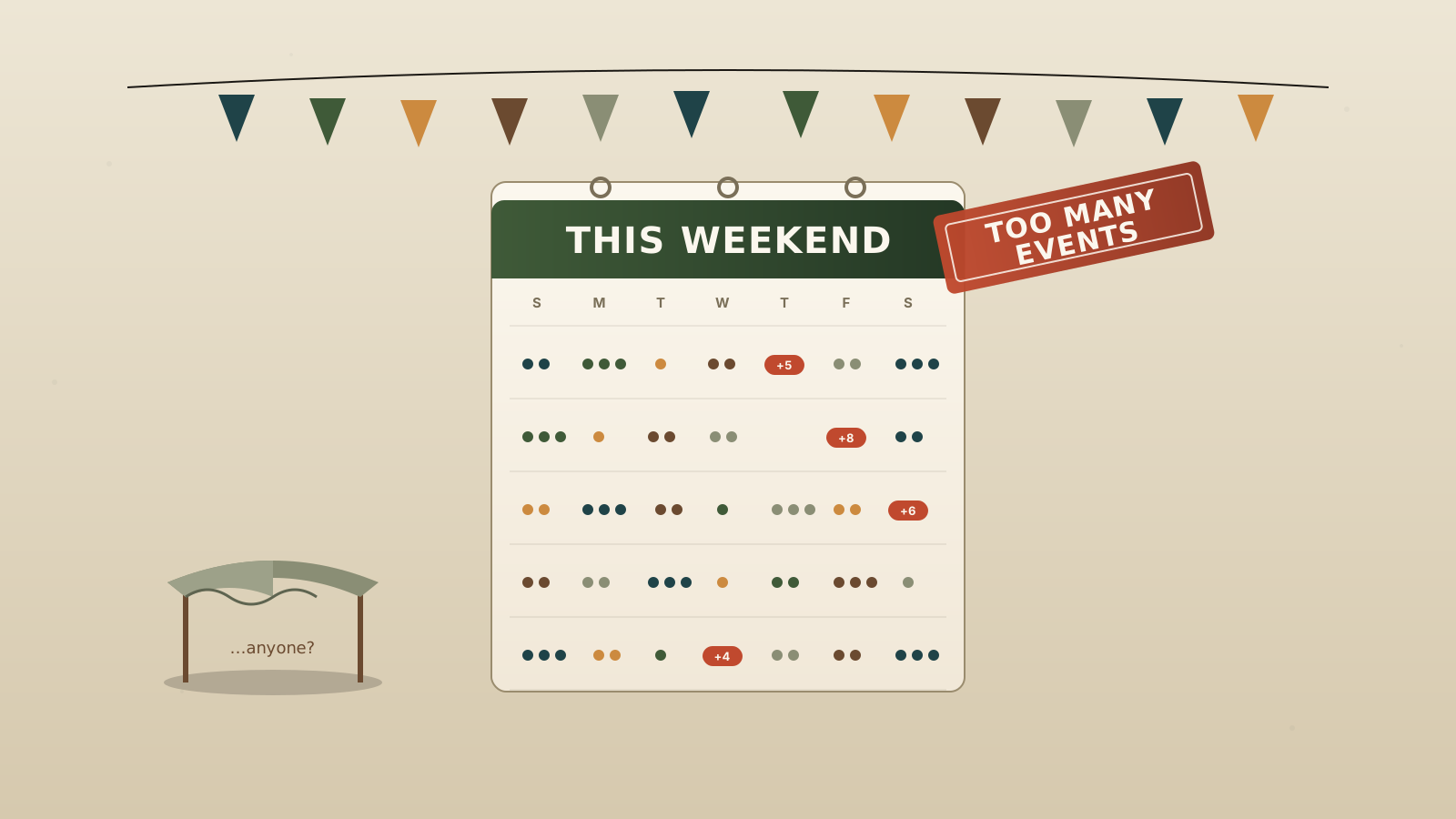
Am I wrong on this? Maybe. And I'll apologize in advance if it rubs anyone the wrong way — but I can't be the only one who thinks there has to be a better way to share the things we make and are passionate about.
Scroll your local Facebook events page on any given week and count the pop-ups, markets, and craft events. I'll wait.
It's a lot, right? It feels like a new one appears every single day. And somewhere along the way, "more events" stopped meaning "more opportunity" — for vendors and for shoppers.
Analysis paralysis is real
If you're a vendor, you know the feeling. Ten events on the calendar this weekend alone. Which one do you pick? Which promoter is legit? Which one actually advertised? You spend more time researching events than making product, and half the time you still guess wrong. That's analysis paralysis, and it's eating this community alive.
If you're a shopper, it's the flip side of the same coin. When there's a market every weekend on every corner, no single event feels special anymore. The excitement of "the big spring craft fair" gets diluted into a dozen half-empty parking-lot pop-ups. So attendance drops. Everywhere.
Let's do the vendor math
Say you pay $30 for a table at a Saturday afternoon pop-up. If you're lucky, a few hundred shoppers walk through.
Here's the part nobody puts on the event flyer: industry numbers consistently show that only about 1–3% of attendees will buy from any given booth — 2% is the standard planning figure experienced vendors use. Older craft-fair wisdom says roughly 10% of attendees buy anything at all, spread across every vendor at the show.
So run it:
- 200 shoppers × 2% = 4 sales.
- At a $20 average item, that's $80 gross.
- Now subtract your table fee, your materials, your gas, and the entire Saturday you'll never get back.
That's not a business opportunity. That's an expensive way to find out the promoter didn't market the event.
Then you pack up, load the truck, and read the comments in the vendor groups that night — and it's the same story, over and over. Different town, same flop.
The problem isn't vendors. It isn't shoppers either.
We are overrun with little events, and too many of them are one-hit flops. Somebody books a venue, throws up a Facebook event, collects table fees, and calls it promotion. No advertising budget. No track record. No accountability. And when 40 people show up, the promoter still got paid — the vendors took the loss.
That's the part that gets me. In this model, the only person guaranteed to make money is the one who did the least work.
What we actually need
I don't think the answer is fewer makers or fewer markets. I think it's better promoters — and a way to tell them apart from the rest.
We need promoters who:
- Work for the vendor. Your table fee should buy marketing, not just a parking space. Real advertising, real outreach, real effort to put shoppers in front of your booth.
- Are consistent. A promoter who runs the same event, same location, same schedule, year after year builds something a one-off never can: a shopper habit. Consistency is what turns "some market" into the market.
- Are accountable. Vendors should be able to see a promoter's track record before they hand over a fee — past attendance, past vendor reviews, whether they've ever flopped and how they handled it.
The good promoters are out there, and honestly, they're getting drowned out by the noise just like the rest of us. They deserve to be found — and the flops deserve to be flagged.
Until vendors can vet promoters as easily as promoters collect table fees, we're going to keep funding other people's bad weekends.
What's your worst "paid the fee, nobody showed" story? Drop it in the comments — and tell me what the promoter did (or didn't do) about it.